


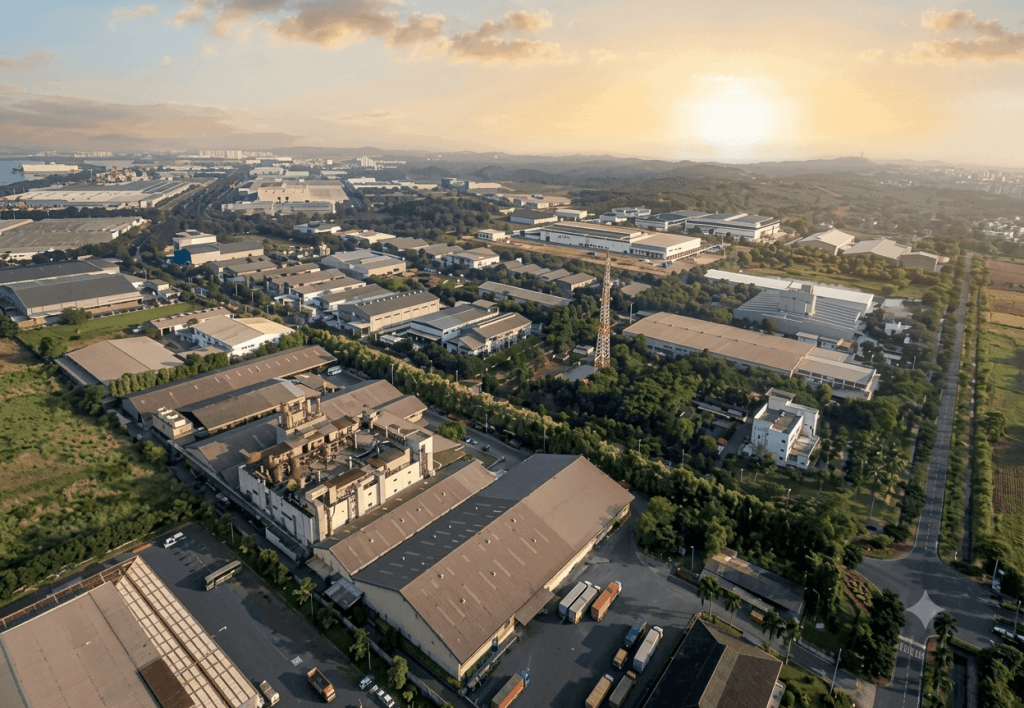
Unlike some property sectors that are heavily influenced by short-term market cycles, industrial land often benefits from infrastructure development, business expansion, and growing demand for industrial space.

If you have been watching the property landscape closely, you know that commercial sectors like retail and office spaces can shift rapidly based on work-from-home trends or shifting consumer shopping habits. Industrial assets, however, function as the literal bedrock of our global economy.
In this comprehensive guide, we will unpack exactly what industrial land investment is, why global demand continues to rise, what critical factors influence your potential returns, and how you can evaluate opportunities effectively to secure stable growth.
Why Are More Investors Looking at Industrial Land?
The global shift in economic priorities has completely transformed how corporations look at physical space.
Supply chains are no longer treated as back-office details; they are now recognized as core strategic advantages.
Consequently, smart capital is moving steadily away from highly volatile real estate classes into more resilient options.
What Is Industrial Land Investment?
At its core, industrial land investment refers to the acquisition of land specifically zoned for industrial use—such as manufacturing plants, assembly facilities, warehouse centers, and data hubs.
It differs dramatically from residential or standard commercial property investments because it relies on different operational drivers.
Instead of tracking foot traffic or housing trends, industrial assets depend on logistics networks, heavy utility accessibility, and regional trade corridors.
Tenants in this space typically sign much longer leases and invest heavily in customizing the property, making them highly stable partners for landowners.
Why Industrial Assets Are Gaining Attention
There are four main drivers propelling this surge in interest:
- Manufacturing Growth: Countries are actively localizing their manufacturing bases to protect against global supply shocks, creating an immediate need for heavy industrial plots.
- Supply Chain Expansion: The massive rise of e-commerce has forced companies to store inventory closer to consumer markets, driving up the need for strategic regional hubs.
- Logistics Demand: “Just-in-time” delivery models are being replaced by “just-in-case” inventory buffers, requiring massive, modern storage spaces.
- Industrial Park Development: Modern, master-planned industrial estates are replacing standalone, unserviced factories. These integrated hubs offer a smoother, more efficient environment for corporate tenants.
Which Types of Industrial Land Investment Are Available?
Before you commit capital, it is vital to recognize that industrial land is not a uniform asset class. Depending on your risk tolerance, timeline, and strategic capabilities, different types of land assets will serve your portfolio in unique ways.
Investing in Developed Industrial Land
Developed industrial land is property located within a master-planned estate that already features roads, power grids, water lines, and legal zoning clearances.
The primary advantage here is rapid operational readiness. Tenants can break ground on construction immediately without navigating years of bureaucratic red tape, minimizing time-to-market risks and accelerating your initial cash flow.
Investing in Undeveloped Industrial Land
Undeveloped or “raw” land offers the highest potential for capital appreciation, but it demands patience.
You buy the land at a lower cost per hectare and hold it as the surrounding region develops. The major challenge involves navigating zoning changes, managing high initial infrastructure costs, and bearing holding expenses before the property can actively generate revenue.
Build-to-Suit Opportunities vs. Ready Industrial Sites
A key strategic choice for modern long-term investors is deciding between these two operational formats:
- Build-to-Suit (BTS): Under this model, you partner closely with a specific tenant to design and construct a facility tailored precisely to their technical needs. This usually guarantees exceptionally long lease terms (often 10 to 20 years) and minimal vacancy risk.
- Ready Industrial Sites: These are flexible, standard land plots or speculative buildings designed to accommodate a wide variety of standard manufacturing or logistics operations. They offer higher flexibility and can be leased out quickly to multiple types of tenants as market demand shifts.
What Makes Industrial Land a Long-Term Investment Opportunity?
Industrial land is fundamentally a long-horizon asset. It rewards patience and structural foresight far more than speculative trading.
Potential for Capital Appreciation
The fundamental rule of economics applies directly here: supply is finite, but demand is growing. As prime locations near major ports, highways, and cities fill up, remaining industrial plots naturally experience land scarcity.
Over a multi-year horizon, this structural shortage drives consistent capital appreciation for well-located assets.
Demand Driven by Manufacturing and Logistics
Industrial tenants do not move easily. Setting up a heavy manufacturing line, an automotive assembly plant, or a high-tech data center involves millions of dollars in specialized equipment.
Because these companies anchor themselves to a specific location for decades, your underlying land asset benefits from reliable, multi-decade structural demand that smoothly outlasts temporary economic downturns.
Flexibility for Future Development
Industrial plots offer incredible long-term adaptability. A large industrial lot can evolve alongside technology. A plot used for light manufacturing today can easily be adapted into a modern cold-storage facility, an advanced logistics depot, or a high-density data hub in the future, protecting your portfolio from obsolescence.
What Factors Can Influence Industrial Land Value?
Not all industrial plots yield identical results. To ensure your investment delivers sustained long-term returns, you must critically analyze the core external drivers that define structural value.
Infrastructure and Road Connectivity
An industrial site is only as valuable as its connection to the outside world. High-capacity roads, wide internal estate lanes, and direct access to primary national toll systems are mandatory. Without these, transportation delays will quickly eat away at your tenants’ operational margins.
Access to Logistics Networks
Look carefully at the broader multimodal transit ecosystem. How close is the site to deep-water seaports, international airports, and dedicated freight rail networks? True value lies at the crossroads of these primary shipping lanes, which directly lower your tenants’ domestic and international shipping costs.
Labor Availability in the Area
A massive factory or high-tech assembly plant is useless without a capable workforce to run it. The surrounding region must offer a deep, sustainable pool of skilled technical labor, engineers, and support staff, balanced by competitive and stable regional labor costs.
Utilities and Operational Support
Modern advanced manufacturing requires an immense, uninterrupted supply of resources. A premier industrial park must guarantee high-voltage electrical grids, stable industrial gas networks, high-capacity water treatment systems, and high-speed fiber-optic connectivity.
Estates that proactively offer comprehensive administrative support like integrated data management and streamlined legal licensing will always stand out to premium global tenants.
How Should Investors Evaluate Potential Returns?
Analyzing returns in the industrial sector requires shifting your perspective away from standard residential metrics like simple gross rental yield.
Rental Income vs. Capital Growth
Industrial assets offer a balanced, two-pronged financial profile. Developed plots inside premium estates provide immediate, predictable rental yields backed by long-term leases.
Simultaneously, the surrounding economic expansion continuously boosts the underlying value of the land asset itself, presenting substantial capital growth potential upon future resale.
Short-Term Objectives vs. Long-Term Strategy
Are you looking to park capital safely for twenty years, or do you intend to develop properties actively for immediate lease? Your timeline dictates your strategy.
Long-term corporate investors generally favor developed industrial estates because they mitigate near-term zoning risks and eliminate unexpected infrastructure development hurdles.
Looking Beyond Purchase Price
A cheap plot of land can quickly become an expensive mistake. You must thoroughly factor in total operational and development costs.
Hidden expenses like building soil fortification, clearing environmental compliance audits, connecting custom high-voltage lines, and paying local municipal fees can rapidly wipe out any initial purchase discounts.
What Risks Should Investors Understand Before Buying Industrial Land?
A professional investment strategy always balances opportunities with clear, clear-eyed risk management. Industrial land is a resilient asset class, but it is not entirely immune to broader market pressures.
Macroeconomic adjustments and global trade cycles can slow down corporate expansion plans, extending your timelines for securing tenants.
Additionally, local regulatory adjustments or unexpected zoning updates can change how a property may be used if you are holding raw, uncoordinated land outside a planned estate.
Future demand uncertainty can also arise if a region’s infrastructure drops behind global standards. Finally, unexpected infrastructure delays such as a delayed government highway project or cargo port expansion can impact your operational timelines.
Choosing to buy within a trusted, master-planned estate run by an experienced developer is the most effective way to insulate your capital against these risks.
What Steps Can Help You Get Started?
If you are ready to explore this sector actively, follow this clear, structured approach to lay a strong investment foundation:
- Conduct Market Research: Analyze regional macro-trends. Identify where major global corporations are actively setting up new manufacturing hubs and target those specific growth corridors.
- Align Investment Goals and Budget: Clearly decide whether your priority is immediate rental income or holding for long-term capital appreciation, and budget comprehensively for all infrastructure needs.
- Perform Thorough Due Diligence: Verify all regional zoning laws, double-check local environmental restrictions, and ensure clear, unencumbered land titles before signing any contracts.
- Evaluate Long-Term Development Potential: Look past the current state of the plot. Assess the 10-year master plan of the entire surrounding area to ensure your asset will remain valuable to future industries.
Seize the Next Wave of Industrial Growth
Industrial land investment continues to stand out as a premier path to durable, long-term wealth. However, maximizing your returns requires choosing a partner and a location that are actively built for the future of global commerce.
Look no further than Subang Smartpolitan a massive 2,717-hectare integrated industrial park designed from the ground up as a smart, sustainable city in Subang, West Java.
Developed by the highly trusted PT Surya Semesta Internusa Tbk (SSIA), Subang Smartpolitan perfectly embraces the modern “live, work, play, and learn” philosophy, tailored specifically for the demands of Industry 4.0.
Perfectly situated in the heart of West Java’s premier supply chain corridor, Subang Smartpolitan sits just 89 km east of Jakarta and offers direct, seamless connections to vital national infrastructure: the new Patimban Seaport, Kertajati International Airport, the Trans Java Toll Road network, and the upcoming Jakarta-Surabaya High-Speed Train system.
Featuring a complete, world-class ecosystem of industrial plots, commercial zones, residential neighborhoods, and advanced educational institutions, it provides everything your business needs to scale efficiently while lowering long-term logistics costs.
Do not wait for the market to crowd you out. Align your portfolio with Indonesia’s premier smart industrial ecosystem today.
Frequently Asked Questions (FAQ)
1. What is industrial land investment?
Industrial land investment involves buying land plots explicitly zoned for industrial purposes, such as manufacturing, heavy assembly, warehousing, logistics hubs, and data centers, rather than residential or standard retail operations.
2. What are the main types of industrial land investments?
The primary types include developed land inside master-planned estates (ready for immediate construction), raw or undeveloped land (held for long-term appreciation), and customized Build-to-Suit (BTS) opportunities tailored for specific long-term corporate tenants.
3. What factors affect industrial land value?
Key factors include proximity to vital logistics networks (seaports, airports, major highways), high-capacity utilities (stable electricity, gas lines, fiber optics), local labor availability, and a supportive regional regulatory framework.
4. Is industrial land a good long-term investment?
Yes. Because industrial tenants make large capital investments in their facilities and sign long-term leases, industrial land offers highly stable cash flow, low turnover rates, and excellent protection against short-term economic volatility.
5. How do investors evaluate ROI from industrial land?
Investors look at a combination of stable, long-term rental yields and strategic capital appreciation driven by regional economic growth, while subtracting total development costs like zoning clearances and utility connections.

















Komentar