


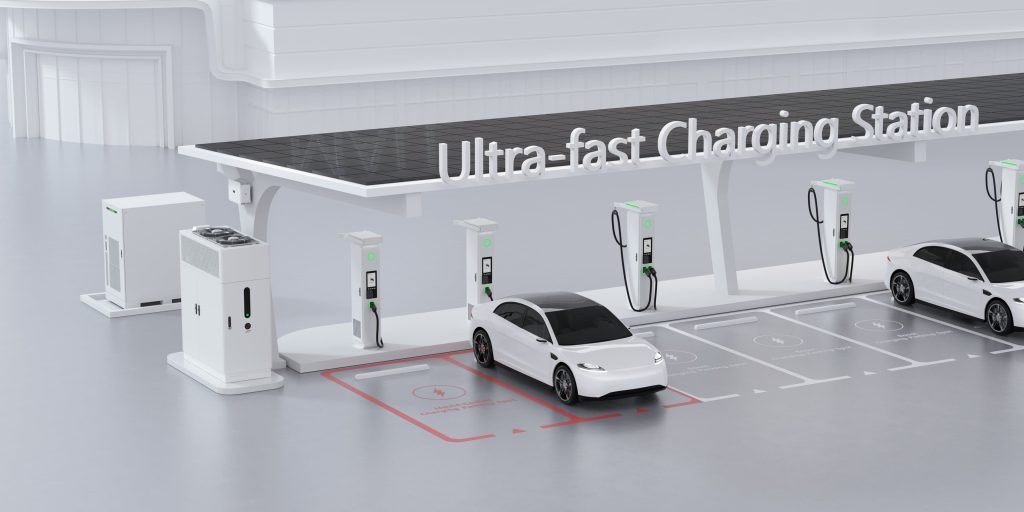
Deretan.com – The experience of using an electric vehicle depends not only on battery capacity but also on how conveniently and reliably the battery can be replenished. EV battery charging infrastructure must align charger power, vehicle compatibility, site electrical capacity, and the driver’s journey or fleet schedule.

The most useful design discussions begin with the conditions the system will face in daily operation. Good procurement balances present requirements with realistic future demand, without paying for capacity that has no defined use. The central design task is to connect the selected equipment with a clear site requirement.
Coordinate energy storage and renewable generation
A charging site may combine grid electricity, onsite solar generation, and battery storage. An energy management system can coordinate these resources according to site limits, time-of-use prices, and charging priorities.
The operating strategy should protect vehicle readiness first while using flexibility where it is technically and commercially practical.
Design for uptime and maintainability
Fleet operators depend on charging availability because a failed dispenser can disrupt a planned route. Redundant charging capacity, remote diagnostics, spare parts, service response, and preventive maintenance should be included in the operating plan.
Alarm handling needs to distinguish a charger fault from a vehicle-side issue or an upstream power event. For a closer look at the solution scope, review EV battery charging and consider how its documented functions fit the site layout, electrical interfaces, and operating plan.
Plan vehicle circulation and physical layout
Large trucks need wider turning areas, adequate bay length, clear sightlines, and safe separation between pedestrians and moving vehicles.
Charger placement should avoid cable paths that create trip hazards or interfere with vehicle access. Civil works, drainage, lighting, and weather protection should be considered before equipment foundations are installed.
Define the operating boundary
A useful specification states what the equipment is expected to do, under which conditions, and where the supplier’s responsibility ends.
Capacity, environmental limits, interfaces, protection behavior, and service assumptions should be written in measurable terms.
This makes proposals easier to compare and gives commissioning teams a practical basis for acceptance. Performance should always be assessed against the actual installation conditions and the complete system boundary.
Check grid capacity before fixing charger numbers
High-power charging can create a substantial demand on the local electrical connection. The site assessment should review transformer capacity, feeder limits, utility approval, load profiles, and any planned expansion.
If the available grid capacity is constrained, staged deployment or coordinated energy storage may be part of the project discussion.
A project specification for EV battery charging should identify the applicable configuration, installation limits, commissioning checks, and service responsibilities.
Include safety in every operating procedure
Electrical protection, emergency stop access, cable handling, vehicle positioning, thermal monitoring, and isolation procedures need to be understood by drivers and maintenance staff.
Commercial sites may operate in rain, dust, vibration, or high ambient temperatures, making enclosure ratings and inspection routines important. Training should reflect the actual equipment and site layout.
















Komentar